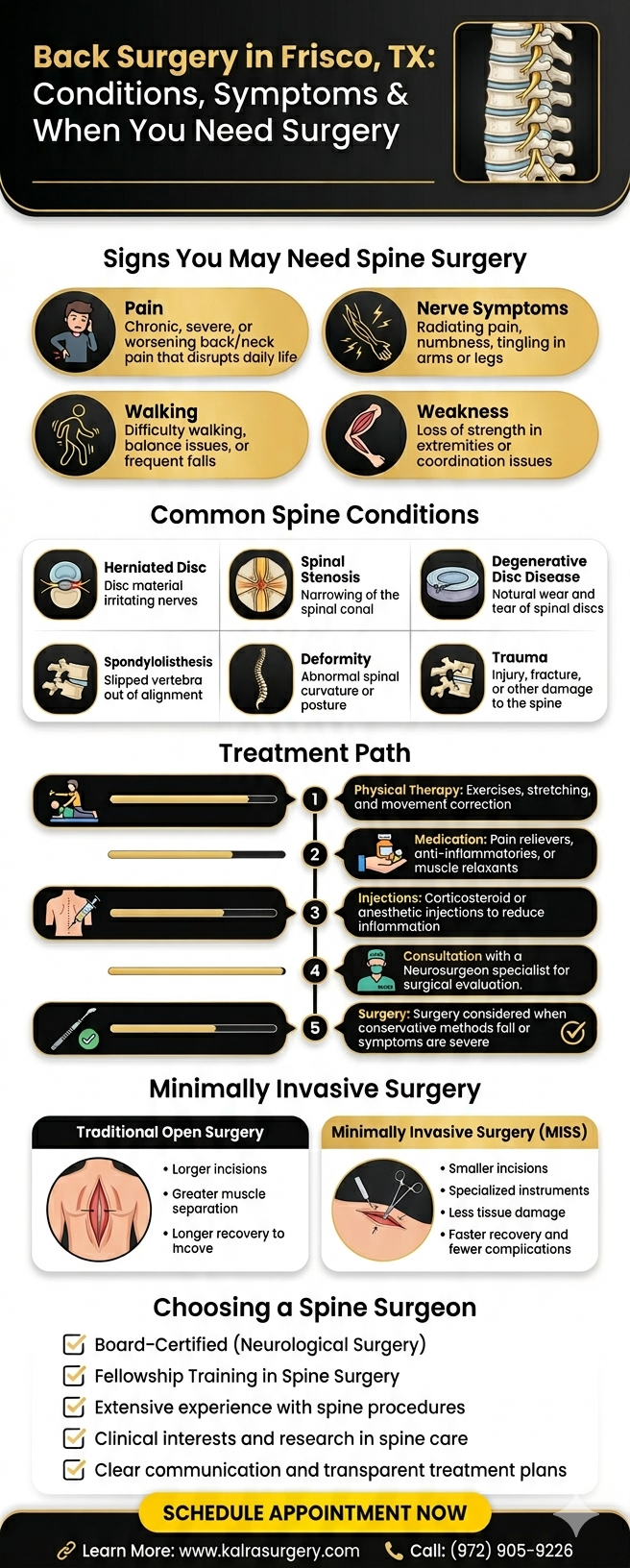
If you are dealing with chronic back or neck pain, you have probably already learned something important: not all spine problems resolve with rest, medication, or physical therapy. While conservative care is always the first step, some conditions require a more advanced solution. At Kalra Brain and Spine in Frisco, Texas patients receive specialized evaluation and surgical care tailored to complex spinal conditions. This guide breaks down the most common conditions we treat that may require back surgery, how they present, and when surgical intervention becomes the right choice. With a commitment to excellence, we guide you through the journey to recovery, ensuring that you make informed decisions with confidence and clarity.
What Conditions May Require Back Surgery?
1. Herniated Discs
A herniated disc, often referred to as a slipped or ruptured disc, occurs when the soft inner gel of a disc pushes through its tougher outer layer. This can irritate nearby nerves and result in pain, numbness, or weakness in the arms or legs. Herniated discs are a common condition treated with back surgery when conservative treatments like physical therapy, medications, or injections fail to provide adequate relief. Surgical intervention may involve removing the protruding portion of the disc, relieving pressure on the nerve and restoring function and comfort.
What are Symptoms of a Herniated Disc?
- Radiating leg pain (sciatica)
- Numbness or tingling
- Muscle weakness
When is Surgery Considered for a Herniated Disc?
If symptoms persist beyond several weeks or neurological deficits develop, procedures like microdiscectomy may be recommended.
2. Spinal Stenosis
Spinal stenosis is characterized by the narrowing of the spaces within the spine, which can exert pressure on the spinal cord and nerves. This condition can lead to symptoms such as pain, tingling, numbness, or muscle weakness, primarily in the lower back and legs. Back surgery for spinal stenosis typically aims to decompress the spinal canal, often through procedures such as a laminectomy. This helps alleviate symptoms by allowing more space for the spinal cord and nerves.
What are Symptoms of Spinal Stenosis?
- Leg pain with walking (neurogenic claudication)
- Lower back stiffness
- Relief when bending forward
What are Surgical Options for Spinal Stenosis?
- Laminectomy (decompression)
- Minimally invasive decompression techniques
This is one of the most common reasons for back surgery in older adults in Frisco, Texas.
3. Degenerative Disc Disease
Degenerative disc disease is a condition where the intervertebral discs, which act as cushions between the vertebrae, begin to wear down over time. This can cause chronic pain and discomfort. Surgical options may include spinal fusion or artificial disc replacement, aiming to stabilize the spine and alleviate pain by replacing the degenerated disc with an implant.
What are Symptoms of a Degenerative Disc?
- Chronic low back pain
- Pain worsened by sitting or bending
- Intermittent flare-ups
When Surgical Procedures are Considered for Degenerative Disc Disease?
- Spinal fusion
- Cervical disc replacement (in select patients)
Careful diagnostic testing is required to determine if the degenerative disc is truly the cause of your pain.
4. Spondylolisthesis
Spondylolisthesis occurs when one vertebra slips forward over the one below it, potentially causing significant pain or nerve damage. Surgical treatment often involves spinal fusion to stabilize the affected area. Patients can benefit from tailored surgical plans designed to restore spinal alignment and function, reducing symptoms and improving quality of life.
What are Symptoms of Spondylolisthesis?
- Lower back pain
- Leg pain or numbness
- Instability when standing or walking
What Surgical Procedures are Considered for the Treatment of Spondylolisthesis?
- Decompression with spinal fusion
At Kalra Brain and Spine, surgical planning focuses on restoring stability while minimizing unnecessary fusion levels.
5. Spinal Deformities (Scoliosis & Kyphosis)
Spinal deformities, such as kyphosis and scoliosis, can significantly impact your quality of life.
Kyphosis refers to an excessive outward curve of the spine, resulting in a hunched back appearance. It’s often associated with poor posture, but in severe cases, it can arise from developmental issues, degenerative diseases, or traumatic injuries.
Scoliosis, on the other hand, involves a lateral curvature of the spine. It can manifest during the growth spurt before puberty, with causes ranging from congenital abnormalities to neuromuscular conditions.
What are Symptoms of Spinal Deformities?
- Visible spinal curvature
- Back pain
- Fatigue or imbalance
- Noticeable change in posture
When is Surgery Recommended for Spinal Deformity?
- Progressive deformity
- Significant pain or functional limitation
These cases require highly specialized surgical expertise, particularly in adults with complex anatomy.
6. Spinal Tumors and Infections
Understanding Spinal Tumors
Spinal tumors can manifest as either benign or malignant growths along the spine. These tumors may originate within the spinal column itself or metastasize from other areas of the body. Malignant tumors, which are cancerous, require immediate attention due to their potential for rapid growth and spread. Benign tumors, while not cancerous, can still cause significant issues by compressing nerves or the spinal cord, leading to pain, numbness, or even paralysis. Early intervention is crucial to prevent serious complications and preserve neurological function.
Recognizing Spinal Infections
Spinal infections, though less common, pose severe risks to spinal health. These infections can result from bacterial or fungal invaders and may affect the vertebrae, intervertebral discs, or surrounding tissues. Symptoms often include severe back pain, fever, and neurological deficits. Prompt diagnosis and treatment are essential to avoid permanent damage. Treatment typically involves a combination of antibiotics or anti-fungal medications, and in severe cases, surgical intervention to remove infected tissue or stabilize the spine may be necessary.
What are Examples of Spinal Tumors and Infections?
- Primary spinal tumors
- Metastatic cancer to the spine
- Spinal infections (osteomyelitis, discitis, spinal abscess)
What Treatment is Recommended for Spinal Tumors and Infections?
- Surgical decompression
- Tumor removal or biopsy
- Stabilization procedures
These cases often involve coordination with oncology and infectious disease specialists.
7. Traumatic Spine Injuries
Understanding Traumatic Spine Injuries
Traumatic spine injuries often result from sudden accidents or impacts that exert immense force on the spinal column. These injuries can be life-altering, causing pain and affecting mobility. Common causes include car accidents, falls, sports injuries, or violent incidents. Depending on the severity, they can lead to temporary or permanent impairment.
What Conditions are Associated with Traumatic Spine Injuries?
- Fractures: Vertebral fractures might compromise spinal stability, requiring surgical intervention to realign and stabilize the spine.
- Dislocations: When vertebrae slip out of alignment, they can compress nerves, necessitating prompt surgical correction.
- Spinal Cord Injuries: These injuries can cause partial or complete paralysis and demand immediate attention to minimize damage.
What are Symptoms of Traumatic Spine Injuries?
- Severe back pain
- Limited mobility
- Neurological deficits
Why is Surgery Recommended for the Treatment of Traumatic Spine Injuries?
- Stabilize the spine
- Protect the spinal cord
- Restore alignment
When traumatic spine injuries occur, timely intervention is critical to prevent long-term complications.
When May Back Surgery Be Necessary?
Assess the Need for Back Surgery
Deciding whether back surgery is necessary can be a difficult decision. Often, patients explore this option after non-surgical treatments, such as physical therapy, medication, and injections have not provided sufficient relief from persistent pain and discomfort. It’s essential to understand that surgery is not always the first course of action, but it becomes a viable option when conservative treatments fail, and quality of life is significantly impacted.
Chronic pain, numbness, or weakness in the back or extremities that interferes with daily activities may signal that surgical intervention is required. These symptoms can stem from various underlying conditions, such as herniated discs or spinal stenosis, which compress nerves and hinder movement.
Back surgery is rarely the first option, and it should not be. Most neurosurgeons will recommend:
- Physical therapy
- Anti-inflammatory medications
- Activity modification
- Injections (such as epidural steroid injections)
Evaluate the Impact On Your Daily Life
The decision to proceed with back surgery often hinges on how significantly the condition affects your everyday life. Pain that disrupts sleep, work, and personal activities may necessitate surgical consideration. Additionally, if there is a progressive loss of function or mobility, or if you’re experiencing severe nerve compression that could lead to permanent damage, surgery might be the most effective solution.
Surgery becomes a strong consideration when:
- Pain persists despite conservative treatment
- Nerve compression causes weakness or numbness
- Structural instability is present
- Quality of life is significantly impacted
When Should I Consult With a Specialist?
Consultation with a neurosurgical spine specialist is crucial for determining the necessity of surgery. Dr. Kalra will conduct a thorough evaluation, including imaging studies such as MRIs or CT scans, to diagnose the exact cause of pain. Discussing the potential benefits, risks, and recovery expectations to provide clarity on your specific situation and decision.
The decision to proceed with back surgery will be made collaboratively between you and Dr. Kalra, ensuring a treatment plan is tailored to your specific needs and long-term well-being. At Kalra Brain and Spine, our focus is on evidence-based decision-making, meaning surgery is recommended only when it provides a clear benefit to restore function and quality of life.
You should consider seeing Dr. Kalra if you experience:
- Persistent back or neck pain lasting more than 6–8 weeks
- Pain radiating into arms or legs
- Weakness, numbness, or tingling
- Difficulty walking or maintaining balance
How Should I Choose the Right Spine Surgeon in Frisco, Texas?
Understand the Importance of Expertise
Selecting the right spine surgeon is a pivotal decision that can significantly impact your outcome, recovery, and overall well-being. Expertise is paramount when dealing with intricate spinal conditions. You should seek a surgeon who not only possesses comprehensive medical knowledge but also specializes in the specific spinal issue you are experiencing. Surgeons with a robust background in neuroscience and spinal surgery are often well-equipped to handle complex cases with precision and care.
Evaluate Credentials and Experience
Credentials and experience play a crucial role in your decision-making process. Ensure that your surgeon is board-certified and has a proven track record of successful surgeries. It’s beneficial to inquire about their experience with the specific procedure you require. Furthermore, consider their affiliations with reputable medical institutions and their participation in ongoing education—this indicates their commitment to staying updated with the latest advancements in spinal surgery.
Assess Communication and Patient Interaction
Effective communication between you and your surgeon is essential for a successful surgical experience. A competent spine surgeon should be able to explain your condition, the proposed procedure, and potential outcomes in a clear, understandable manner. They should be responsive to your concerns and willing to answer any questions you may have. This rapport not only builds trust but also ensures you are fully informed and comfortable with the treatment plan.
Consider Patient Reviews and Testimonials
Patient reviews and testimonials provide valuable insights into a surgeon’s reputation and patient satisfaction. Look for feedback regarding the surgeon’s bedside manner, the staff’s professionalism, and the overall experience at the clinic or hospital. Positive reviews highlight a surgeon’s ability to deliver quality care, while negative reviews may flag potential red flags to consider. Choosing a spine surgeon involves careful consideration of these factors to ensure that you receive the best care possible for your spinal health.
“Miracle!!! My father was in pain for over 6 months. The kind of pain that causes vomiting and complete incapacitation. 5 different doctors studied his spinal MRI and could not understand the cause of my father’s pain. Dr. Kalra was able to identify and diagnose my father’s issues within 5 min. Surgery was scheduled promptly, and the results were simply a miracle. It was like turning a switch off, and my father was no longer in pain. My family is eternally grateful and thankful to Dr. Kalra and his staff for saving a life. This practice is a blessing to the DFW area. I also want to acknowledge how accommodating and professional the front staff and PAs are. Our situation was extraordinary, and this practice met and exceeded all expectations! Thank you!” Bryan E.
“Dr. Kalra takes time with you and I was at total peace regarding my surgery. He is excellent in his field and will never operate if there is an alternative. I wish I had agreed to surgery along time ago. I expected to have some pain, but I literally had none. This procedure was amazing. My mobility was almost zero and I went home the next day with a freedom in my gait that I hadn’t had in several years. If Dr Kalra tells you that he can help you, please don’t wait. Thank you, Dr Kalra and Staff!” Patsy S.
“Intelligent, compassionate, skilled and respectful are a few adjectives that come to mind when describing Dr. Kalra. He is an excellent neurosurgeon who has the unique ability to communicate complex issues to his patients in an easy-to-understand, caring and empathetic manner. He has a vast skill set and the ability to handle all surgeries within his specialty, from small carpal tunnel releases all the way up to complex spine and emergency brain surgery, with expertise and precision. He works hard to do things the “right way” for his patients without ever doing something that is not needed. I highly recommend Dr. Kalra for any of your surgery needs without reservation.”MacArthur B.
“Wow, where do we even begin with Dr. Kalra and his office. My mother had a bad disc fragment impinging on a nerve root in her back giving her excruciating pain down her leg for quite some time. She had seen back doctors before, however her experience with Dr. Kalra was nothing like she’d had before. We were very impressed with Dr. Kalra’s level of professionalism, efficiency, and overall treatment approach. He gave my mom every possible chance to avoid surgery, however in the end, just wasn’t in the cards for her. He showed compassion and empathy in all aspects of patient care. He was very patient, and took time to explain all options during hospitalization. He rounded on my mother in person, as well as his PA, and both displayed wonderful bedside manner. After surgery, my mother’s pain was immediately gone, able to walk unassisted, and was able to return home the very next day. Nobody takes on a personal touch like Dr. Kalra, and because of that, I highly recommend Dr. Kalra and his staff to anyone in need of a spine surgeon in the metroplex and beyond. I am so grateful we traveled the distance for his exceptional care!! He and his team deserve 10 stars!” Mindy C.
“If you’re still searching for the perfect doctor to talk to about your spine pain, you’ve found him! Dr. Kalra’s extensive knowledge and skill has given me my life back. I had a herniated disc that gave me debilitating sciatic nerve pain for over 5 years. I’m a runner and I travel for work, so my life was completely upturned due to this. After seeing several doctors, and trying injections, meds, therapy, etc. it looked like surgery was my best option. You always hope it doesn’t come to that, but if it does, Dr. Kalra is the surgeon you need to call. His team is flawless. They were super responsive, kind, and more than willing to answer every little question I had. Upon meeting Dr. Kalra, he was confident and immediately had an action plan for my case. He explained a complicated procedure in a way I could understand, and clearly laid out my options. He was caring, patient, and really listened. It was so easy to trust him and his team when they handled everything so professionally every step of the way. I had my surgery scheduled just a few weeks after my initial appointment, and it’s been smooth sailing since. It truly could not have gone better. I’d recommend Dr. Kalra 100x to anyone suffering from neck/back pain. If you don’t live nearby, consider making the trip. It’s the kind of quality care worth traveling for!” Jordan F.
Final Thoughts
Back surgery is not about rushing into an operation, it’s about finding the right surgeon, with the right solution, at the right time. Many patients in Frisco, Texas benefit from surgical care only after thoughtful evaluation and failed conservative treatment.
If you’re struggling with ongoing spine issues, a consultation with a specialized spine practice like Kalra Brain and Spine can help clarify your diagnosis, explore your options, and determine whether surgery is appropriate. At Kalra Brain and Spine, the goal is not surgery, it’s education with long-term functional improvement and quality of life.